
Spike flowers bring height, direction, and drama to a floral arrangement. Their blooms travel vertically along the stem, creating a strong line that naturally draws the eye through a design.
In floral design, spike flowers are often called line flowers because of the shape they create. They can stand tall and straight, bend into an unexpected curve, or add just enough height to give an arrangement movement and structure.
What Is a Spike Flower?
A spike flower has an upright form, with florets or clusters of blooms arranged vertically along the stem. Some familiar examples include:
- Gladiolus
- Liatris
- Veronica
- Lupine
- Foxglove
- Snapdragons
- Kniphofia
- Larkspur
- Delphinium
- Stock
- Lavender
- Butterfly bush
Each has its own shape and character, but all can be used to establish a clear line within an arrangement.
When to Harvest Spike Flowers
For many spike varieties, a good time to harvest is when roughly the bottom quarter of the florets have opened. This gives the open blooms a chance to make an immediate impact while leaving the upper florets time to continue opening in the vase.
If too many florets are already open, the flower may have a shorter vase life. If too few are open, the stem may not hydrate or continue opening as well, and it may not create the full effect you want in a design. The ideal harvest stage varies by flower and variety, so consider the one-quarter guideline a useful starting point rather than a rule for every stem.
How to Store Spike Flowers
If you are using spike flowers right away, storage may not require much thought. If you are holding them for a wedding or another event, two factors are especially important.
Ethylene sensitivity: Some spike flowers are sensitive to ethylene, a gas produced by many fruits, vegetables, and aging flowers. Exposure can cause petals or florets to drop. Keep sensitive stems away from produce and limit their time in storage whenever possible.
Gravity: Many spike flowers respond to gravity, a tendency known as geotropism or gravitropism. When the stems are placed horizontally, their tips may begin curving upward toward the sky. The result can be a flower that bends, kinks, or even zigzags once it is added to an arrangement.
Prevention is simple. Store spike flowers upright in their containers and keep the stems as straight as possible. Even a noticeable lean can encourage the tip to curve.
Creating a Strong Line in Floral Design
A spike flower creates a clear line, and a straight line can make a bold statement. I once created a bridal bouquet composed almost entirely of line flowers. The result was simple, sculptural, and dramatic.
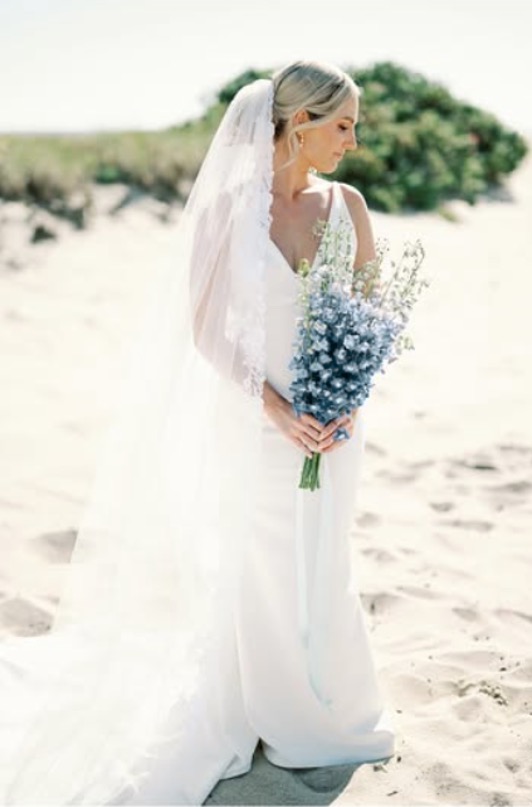
You can let a single spike lead the eye through an arrangement or group several stems together for a stronger vertical shape. Either way, these flowers are useful when a design needs height, structure, or a sense of direction.
Softening Spike Flowers With Airy Blooms
When I want to soften the line of a spike flower, I pair it with something light and airy. Filler flowers such as feverfew or cosmos add movement around the stronger vertical shape.
The spike remains visible, but the smaller blooms break up its outline and create a less dramatic, more garden-inspired feeling. This contrast between structure and softness can make an arrangement feel loose and natural without losing its overall shape.
Letting Curves and Kinks Inspire the Design
Although upright storage helps prevent unwanted curves, I also love when a spike flower has gone a little geotropic and gives me a kink or wave to work with. An unexpected bend can bring energy and personality to an arrangement.
At the end of the day, spike flowers do not have to be perfectly straight or used according to a single formula. Let their lines guide you, pair them with softer flowers when the design calls for it, and enjoy the creative possibilities each stem offers.